
GoRuck end of year sale
• GoRuck continues to have many items on sale. I highly recommend the Rucker 4.0 backpack. It normally costs $245 to $255.
• The 20L standard size only has one color (black) left. But they have 3 colors in the 25L (for taller people) and 3 colors for the 15L (for shorter people). The 15L is only $115, regularly $245.
• You also get a bundle price for the metal weight plate that goes inside the backpack. Email me if you have questions: my family has used all 3 sizes and I have several other backpacks and clothing items. Tough gear.
• Cool article on how to read a book twice quickly. They recommend using Book Darts, which are cool little tabs that function as bookmarks. Here’s the system:
- Put both Book Darts (or bookmarks) at the beginning of the book.
- Read for as long as you wish.
- Mark the place where you stop with one of the Book Darts.
- When you want to read some more, start from the beginning of the book again, read for as long as you wish and mark where you stop with the second Book Dart.
- The next time you read, start from the Book Dart which is nearest the beginning of the book, read for as long as you wish, and mark where you stop with that Book Dart.
- Continue reading as in 5 until you have got both Book Darts to the end of the book.
• I haven’t tried this yet with an entire book, but I had been inadvertently starting books with this method. After 50-100 pages, I decide if I am going to finish the book (the rule for how long to give a book a chance before putting it down is 100 minus your age). If I like it, I go back to the beginning and mark it up, underline, write in margins, etc. Reading back through content for a second time that soon after the first helps the material stick, but also helps you decide what content is worth saving.
Marshmallows
• Low carb marshmallows from ChocZero that taste very close to the real thing. 20g fiber per serving, but no apparent GI upset. Pair with microwaved Carbmaster Chocolate Milk. Less than 10g of carbs for a large mug.
Coffee
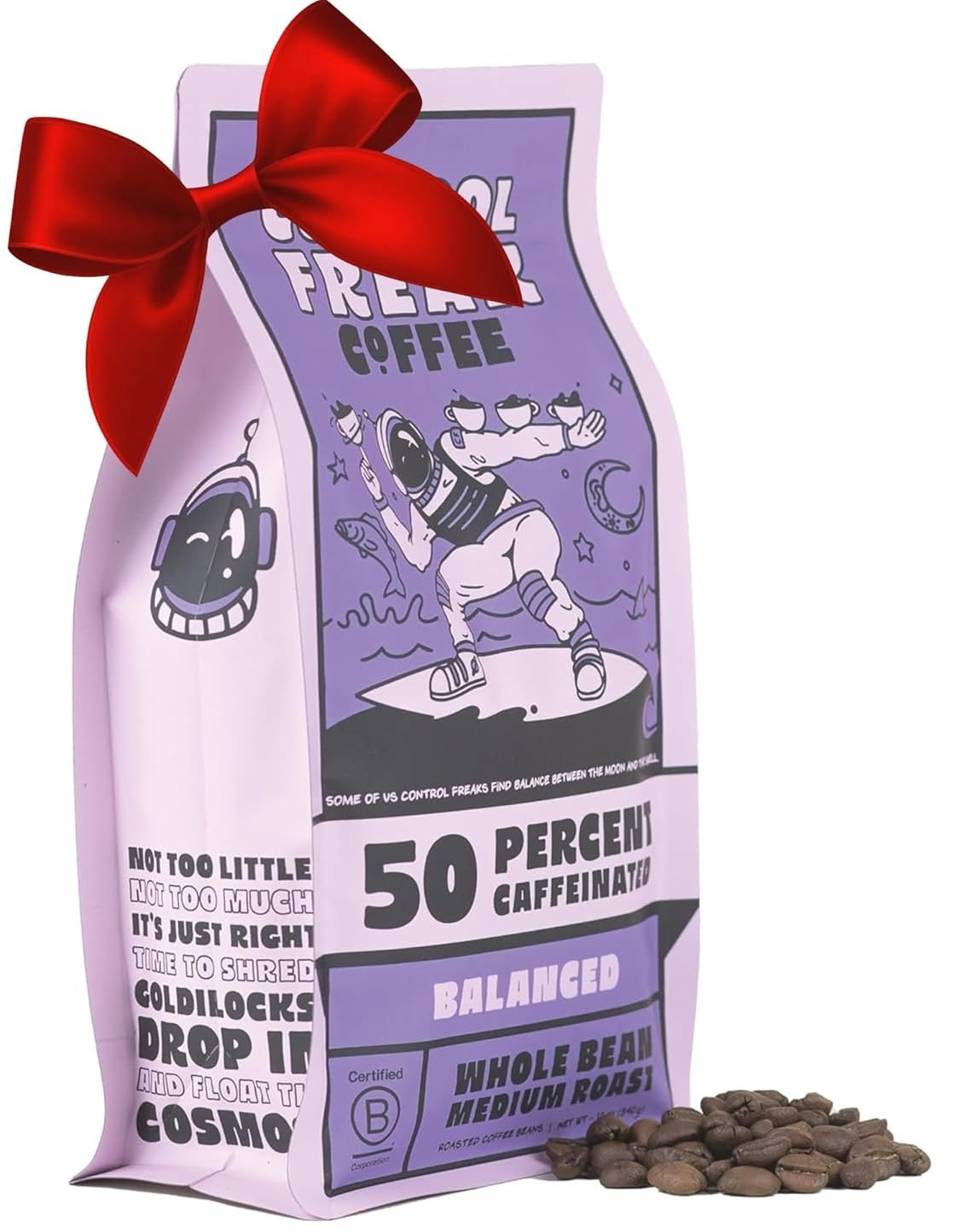
• It is very hard to find quality decaf coffee. We use mostly half caff at our house, so I mix caffeinated beans with good decaf. Control Freak brand not only has high quality decaf beans, but you can also order different percentages 25%, 50%, and 75% caffeinated. We’re using the 50% caffeinated and it is excellent.
Approach to Life
• I really enjoyed Peter Kaufman’s lecture for the Cal Poly Economics Club on a multidisciplinary approach to thinking. The lecture ultimately covers how to live a fulfilling life. Here is a transcript of the whole thing, if you want to read or dump into an AI model. He covers so much ground that it is hard to summarize. Below are some of the points that really resonated with me.
Kaufman read 12 years of monthly Discover magazine interviews with cutting edge scientists: 144 fields/subfields of study. He sorted all of that knowledge into three cosmic buckets: Bucket 1: 13.7 billion years of physics/chemistry (inorganic forces); Bucket 2: 3.5 billion years of biology (life’s adaptations); Bucket 3: 20,000 years of human history (social dynamics). He distilled universal laws from each bucket. 1) Mirrored reciprocation 2) Simplicity beats genius and 3) Compound interest is life’s superpower (Not just for finance – relentless, incremental progress over time describes evolution’s slow grind and lasting human achievements).
• Consistency crushes intermittency: steady habits build unbreakable momentum. You can see why James Clear (who wrote Atomic Habits) posted the transcript on his website.
• Everyone craves attention, respect, meaning, and love. Be nice to people and “go first.” 98% of the time, the other person will respond back with kindness. From Kaufman:
All you have to do, if you want everything in life from everybody else, is first pay attention, listen to them, show them respect, give them meaning, satisfaction, and fulfillment. Convey to them that they matter to you. And show you love them. But you have to go first. And what are you going to get back. Mirrored reciprocation. Right? See how we tie this all together? The world is so damn simple. It’s not complicated at all! Every single person on this planet is looking for the same thing…
Now I’m going to tell you the strategy that dogs use. The dog is going to be very unhappy with me for telling you this. I’m ratting them out. So when your dog is in the backyard and he goes to the fence between your house and the next house and he talks to the dog next door, I’m going to tell you what he says. No one has ever divulged this before. You’re the first group to hear this. Your dog says to the dog next door, ‘Can you believe how easy it is to manipulate human beings and get them to do whatever you want them to do for you?’ And the dog next door goes, ‘I know it’s a piece of cake.’ And your dog says ‘Yeah. All you have to do is every single time they come home, you greet them at the door with the biggest unconditional show of attention that they’ve ever gotten in their whole life. And you only have to do it for like 15 seconds, and then you can go back to doing whatever you were doing before and completely ignore them for the rest of the evening.’
• Why don’t we always take these great odds with other people? Kaufman explains the Nobel prize research on “loss aversion:”
Daniel Kahneman, Nobel Prize winner in economics. Behavioral economics. And what did he win his Nobel Prize for? For answering the question, why would people not go positive and not go first when there’s a 98 percent chance you’re going to benefit from it, and only a 2 percent chance the person’s going to tell you to ‘screw off’ and you’re going to feel horrible, lose face, and all the rest of that. And that’s real. That’s why we don’t do it. He said there’s huge asymmetry between the standard human desire for gain and the standard human desire to avoid loss.
Quotes
If a large diamond is cut up into pieces, it immediately loses its value as a whole; or if an army is scattered or divided into small bodies, it loses all its power; and in the same way a great intellect has no more power than an ordinary one as soon as it is interrupted, disturbed, distracted, or diverted.
– Arthur Schopenhauer
